
Special Session 5
Special Session 5: Innovations in Optical Sensors, Lasers, Amplifiers and Other Optical Devices
Description:
This Special Session targets the critical breakthroughs driving high-performance light generation, signal enhancement, and precision measurement. As modern industrial and telecommunication frameworks demand unprecedented accuracy and efficiency, the integration of quality lasers, amplifiers, and optical sensors becomes paramount.
The technical program focuses heavily on the design and innovation of next-generation lasers, including fiber, semiconductor and solid-state architectures tailored for challenging environments. Complementing these source technologies, the session explores novel amplification paradigms—such as advanced semiconductor and doped-fiber amplifiers—designed to maximize signal integrity while minimizing thermal and phase noise. This special session also targets cutting-edge optical sensors, evaluating their implementation in applications such as biomedical, aerospace, and structural health monitoring where electromagnetic immunity and micro-scale precision are vital. Participants will gain actionable insights into how these foundational photonic elements interact to enable next-generation sensing and communication ecosystems.
Session organizers
Assoc. Prof. Dr. Noran Azizan Cholan, Universiti Tun Hussein Onn Malaysia, Malaysia
Assoc. Prof. Dr. Nor Hafizah Ngajikin, Universiti Tun Hussein Onn Malaysia, Malaysia
The topics of interest include, but are not limited to:
• Optical Sensors
• Lasers and Light Emitting Diode (LEDs)
• Optical Amplifiers
• Optical Transmitters
• Optical Receivers
• Optical Transceivers
Submission method
Submit your Full Paper (no less than 10 pages) or your paper abstract-without publication (200-400 words) via Online Submission System, then choose Special Session 5 (Innovations in Optical Sensors, Lasers, Amplifiers and Other Optical Devices)
Template Download
Introduction of session organizers

Assoc. Prof. Dr. Noran Azizan Cholan
Universiti Tun Hussein Onn Malaysia, Malaysia
Noran Azizan Cholan is currently an Associate Professor with the Faculty of Electrical and Electronic Engineering, Universiti Tun Hussein Onn Malaysia. He received the bachelor’s degree from Universiti Tenaga Nasional in 2002, the master’s degree from Universiti Teknologi Malaysia in 2004, and the Ph.D. degree from Universiti Putra Malaysia in 2014. Prior to his current role, he completed visiting research attachments at the Swansea University, U.K. and the Hong Kong Polytechnic University, Hong Kong, collaborating with international experts to advance research in fiber laser and optical communication. He also held a visiting research appointment at the Telekom Malaysia for conducting applied research in Malaysia’s industry sector. He has authored over 87 ISI/Scopus-indexed journal papers and conference publications. He has been reviewers for many impact factor journals. His research interests include lasers, amplifiers, optics modelling, microwave optics, optical sensors and water quality parameters.
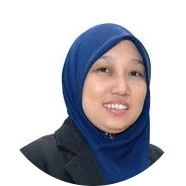
Assoc. Prof. Dr. Nor Hafizah Ngajikin
Universiti Tun Hussein Onn Malaysia, Malaysia
Nor Hafizah Ngajikin received her B.E. and M.E. degrees in Electronic Engineering from Universiti Teknologi Malaysia (UTM) in 2001 and 2003, respectively. She obtained her Ph.D. from UTM, specialising in the development of MEMS-based Fabry–Perot optical tunable filters. From 2004 to 2017, she served as a Senior Lecturer and researcher with the Lightwave Communication Research Group (LCRG) at UTM, where she was involved in research and development activities in optical communication and photonic technologies. She is currently a lecturer at Universiti Tun Hussein Onn Malaysia (UTHM). Her research interests focus on optical devices and sensors, particularly their applications in biomedical and healthcare-related fields. Her research activities include the development of optical sensing technologies for chemical and biological detection, with an emphasis on compact, sensitive, and practical sensing systems. She is also interested in the integration of optical sensing technologies with emerging digital and intelligent approaches to support real-time and non-invasive monitoring. Through her academic and research activities, she has contributed to teaching, research, innovation, and knowledge transfer in the areas of optical engineering, photonics, and sensing technologies. Her work aims to bridge fundamental research and practical applications, particularly in developing optical sensing solutions with potential impact on healthcare and related applications.