
Special Session 2
Special Session 2: Advanced Low-Power CMOS Circuits for Energy Harvesting, Time-Domain Processing, Direct Sensing, and Precision Analog Applications
Description:
This session focuses on recent advances in low-voltage, low-power CMOS circuit design for energy-efficient and emerging electronic systems. It will cover CMOS rectifiers and RF-to-DC converters for RF energy harvesting, time-mode circuits and time-domain signal processing, active impedance realization and impedance-scaling techniques, and low-power current-reference generators. The session will highlight innovative circuit architectures, design methodologies, performance optimization, and practical applications in energy harvesting, biomedical electronics, Internet of Things (IoT) devices, and smart sensing systems.
Session organizer
Prof. Munir A. Al-Absi, King Fahd University of Petroleum and Minerals, Saudi Arabia
The topics of interest include, but are not limited to:
• Low-voltage and low-power CMOS circuit design
• CMOS rectifiers and RF-DC converters for RF energy harvesting
• Time-mode circuits and time-domain signal processing
• Active impedance realization and impedance scaling circuits
• Current reference generator
• Time-mode circuits for direct sensing applications
Submission method
Submit your Full Paper (no less than 10 pages) or your paper abstract-without publication (200-400 words) via Online Submission System, then choose Special Session 2 (Advanced Low-Power CMOS Circuits for Energy Harvesting, Time-Domain Processing, Direct Sensing, and Precision Analog Applications)
Template Download
Introduction of session organizer
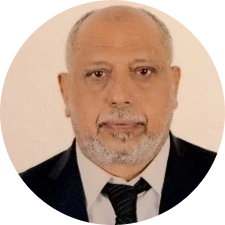
Prof. Munir A. Al-Absi
King Fahd University of Petroleum and Minerals, Saudi Arabia
Dr. Munir A. Al-Absi graduated with a bachelor's degree in 1984 and a master's degree in 1987 from KFUPM in Dhahran, Saudi Arabia. He earned a Ph.D. in 2001 from UMIST in the UK. He is currently a professor in the EE department at KFUPM, where he teaches courses in electronics and instrumentation. His areas of interest in research include RF-DC converters, Time-Mode circuits, circuits for biomedical applications, impedance simulation, and impedance scaling for IC design.