
Invited Speakers
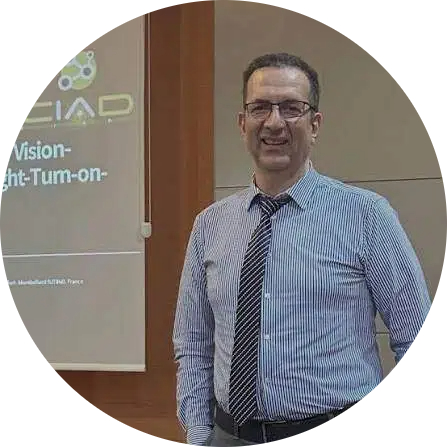 Assoc.
Prof. Esteve Hassan
Assoc.
Prof. Esteve Hassan
Acadia University, Canada
Dr. Esteve Hassan
is an Associate Professor in the Jodrey School
of Computer Science at Acadia University, where
he leads innovative research and instruction in
the fields of the Internet of Things (IoT),
cyber‑physical systems, and machine learning. He
earned his Ph.D. in Electronic and Computer
Engineering from the University of Limerick,
following an M.Eng. and B.Sc./M.Sc. in the same
discipline.
Dr. Hassan’s research focuses on designing
low-power, energy‑harvesting sensor modules,
FPGA-optimized digital prototyping, and
predictive analytics for IoT and Industry 4.0
applications. His scholarly work has resulted in
multiple peer-reviewed publications, including
recent contributions to anomaly detection in
SELinux security policies. He is also a valued
member of the NSERC Scholarships and Fellowships
Review Committee for Computing Sciences,
reflecting his national standing.
At Acadia, Dr. Hassan teaches courses in
embedded systems, data analytics, and machine
learning, and supervises undergraduate and
graduate students on applied research projects
leveraging wireless sensor networks and smart
automation. His collaborative efforts span
academia and industry, enhancing real-world
impact through technology-driven solutions.
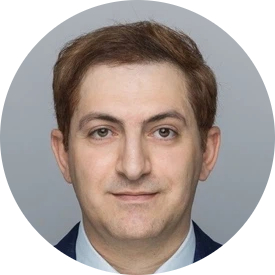 Assoc. Prof. Mohamad Abou Houran
Xi’an Jiaotong University, China
Dr. Mohamad Abou
Houran is an Associate Professor with the School
of Electrical Engineering at Xi'an Jiaotong
University (XJTU), China, where he joined
through the Young Talent Program in 2020. His
research focuses on power electronics, wireless
power transfer (WPT), electromagnetics, and
AI-driven optimization.
He currently serves as the Principal
Investigator (PI) of several research projects,
including a national-level project, a Shaanxi
Provincial Key R&D Program, an industry-funded
project, and a startup research grant. He has
also completed projects funded by the National
Natural Science Foundation of China (NSFC) and
the Ministry of Science and Technology of China.
Dr. Houran has published over 70 peer-reviewed
papers, including more than 45 SCI-indexed
journal papers, with 4 ESI Highly Cited Papers,
and multiple patents in WPT technologies. He is
an IEEE Senior Member and Associate Editor of
the IEEE Consumer Electronics Magazine. He
actively serves as a Technical Program Committee
Member, Session Chair, Invited Speaker, and
reviewer for leading IEEE conferences and
top-tier journals, including IEEE Transactions
on Power Electronics and IEEE Transactions on
Industrial Electronics. In 2025, he was
recognized among the Stanford–Elsevier World's
Top 2% Scientists.
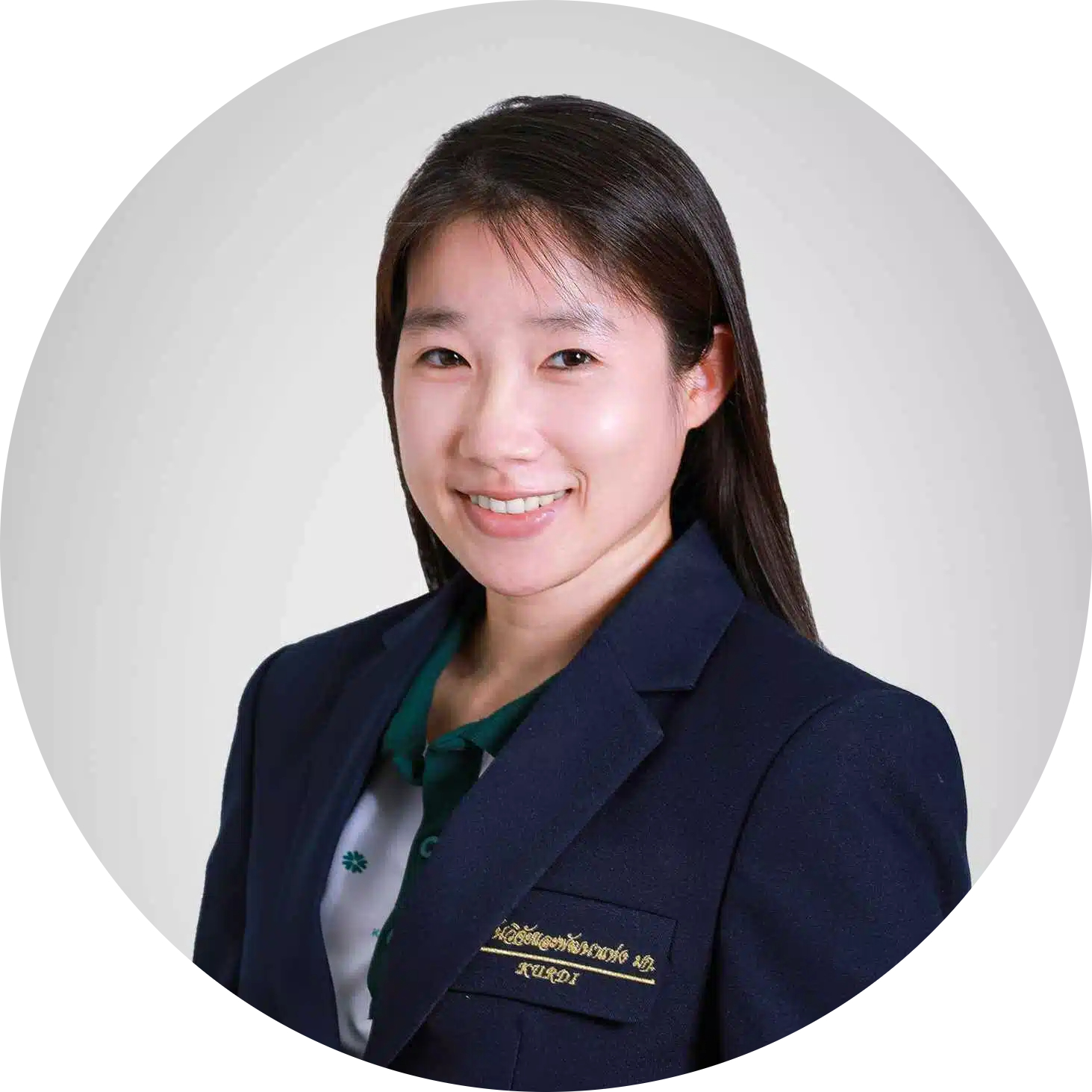 Assoc. Prof. Papis Wongchaisuwat
Kasetsart University, Thailand
Dr. Papis
Wongchaisuwat is an Associate Professor in the
Department of Industrial Engineering at
Kasetsart University, Thailand. She received her
Ph.D. from Northwestern University, USA. Her
research focuses on data analytics, machine
learning, and deep learning, with an emphasis on
developing interpretable and practical
artificial intelligence solutions for complex
real-world challenges. Her interdisciplinary
research spans three major application domains:
medical and healthcare, food and agriculture,
and water resources management. Across these
fields, she develops data-driven methods for
prediction, classification, optimization, and
decision support to improve operational
efficiency and facilitate informed
decision-making. In addition to her academic
research, Dr. Wongchaisuwat actively
conducts consulting projects with organizations
across diverse industries, including
manufacturing, electric utilities, and financial
institutions. She has published her work in
international journals and actively collaborates
with academic, government, and industry partners
to translate research into practical impact.